


Moving into a new apartment is an exciting chapter, whether you’re upgrading to a larger space, relocating for work, or simply craving a fresh start. However, it is often a task that presents its own set of challenges. From sorting through your belongings to making sure everything arrives safely, moving can be stressful, especially when it involves a long-distance or local move. When the move is farther away, the logistics and planning become even more important to ensure all your belongings arrive on time and in good condition.
For local moves, the shorter distance makes logistics simpler, but you will still need to plan carefully for tasks like packing, renting a truck, or hiring movers. Long-distance moves, on the other hand, require more advanced planning, with greater focus on timing, transportation, and coordination.
To make the move easier, start by creating a detailed moving checklist that includes booking movers or truck rentals, gathering packing supplies, and updating your address. Be sure to set aside time for each task and prioritize essentials. With a well-organized checklist, you will reduce stress and stay on track, whether your move is local or long-distance.
Preparation & Planning
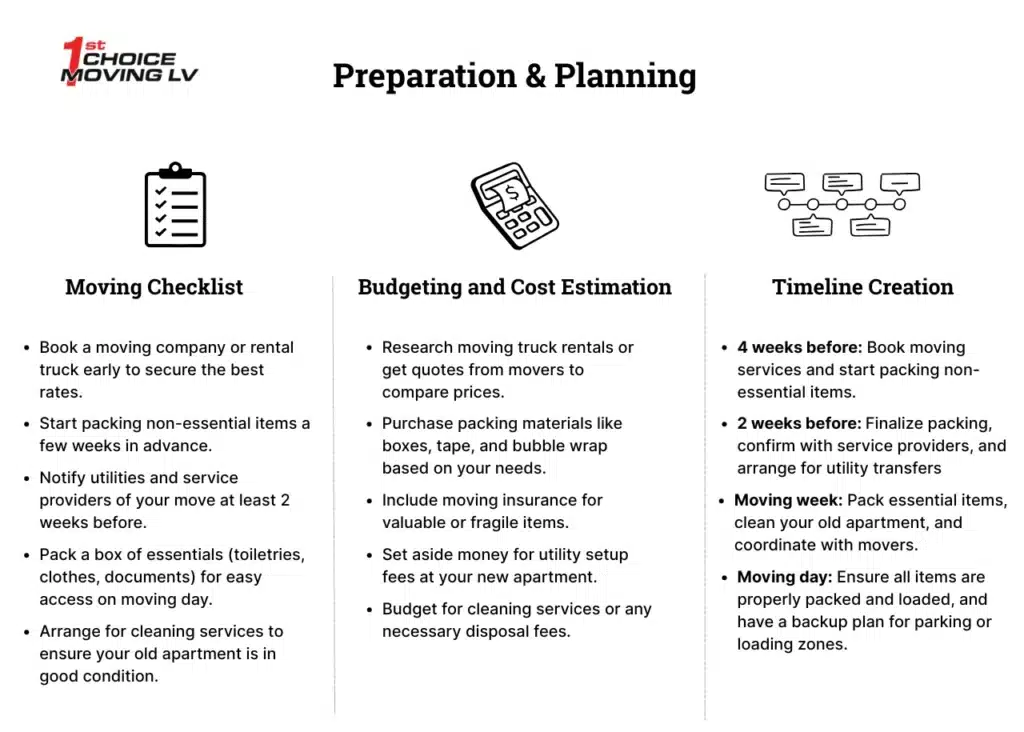
Thorough preparation and planning are key to reducing moving stress and last-minute issues. Start by creating a moving checklist that includes tasks like booking movers, organizing packing materials, and setting up utilities. Establishing a realistic budget for costs like truck rentals and moving services will help you stay on track. With a solid plan, you can manage the process efficiently and avoid last-minute challenges.
Moving Checklist
A moving checklist ensures that every task is completed on time and nothing is overlooked. It breaks down the entire moving process into manageable steps, from packing to utility setup. Here are some suggested items to include:
- Book a moving company or rental truck early to secure the best rates.
- Start packing non-essential items a few weeks in advance.
- Notify utilities and service providers of your move at least 2 weeks before.
- Pack a box of essentials (toiletries, clothes, documents) for easy access on moving day.
- Arrange for cleaning services to ensure your old apartment is in good condition.
Budgeting and Cost Estimation
Setting a budget for your move helps avoid unexpected expenses and ensures you’re financially prepared. Consider all possible costs when estimating your moving budget:
- Research moving truck rentals or get quotes from movers to compare prices.
- Purchase packing materials like boxes, tape, and bubble wrap based on your needs.
- Include moving insurance for valuable or fragile items.
- Set aside money for utility setup fees at your new apartment.
- Budget for cleaning services or any necessary disposal fees.
Timeline Creation
A moving timeline helps keep the process on track, ensuring tasks are completed in an organized manner. Break your move down into a week-by-week schedule:
- 4 weeks before: Book moving services and start packing non-essential items.
- 2 weeks before: Finalize packing, confirm with service providers, and arrange for utility transfers.
- Moving week: Pack essential items, clean your old apartment, and coordinate with movers.
- Moving day: Ensure all items are properly packed and loaded, and have a backup plan for parking or loading zones.
Packing & Organization
Properly packing your belongings not only ensures their safety but also streamlines the unpacking process, making your transition into the new apartment much smoother. Staying organized while packing allows you to avoid unnecessary stress and saves time when settling into your new home. Here are some essential tips to keep everything in order.
Sorting and Organizing Items
Before you even begin packing, take the time to sort through your belongings. This helps reduce clutter and lightens the load, ensuring you are only moving what’s necessary. Here is how to sort and organize effectively:
- Start with categories like clothes, kitchen items, books, and electronics to keep similar items together.
- Declutter by donating or selling items you no longer use. This will save space and reduce moving costs.
- Set aside fragile items (like glassware and artwork) for special packing.
- Separate essentials (toiletries, a few changes of clothes) so they are easily accessible during the move-in process.
Room-by-Room Packing
Packing your apartment by room is one of the most effective ways to stay organized during your move. It ensures that items from each space are grouped, making both packing and unpacking much more manageable. Here are some tips for packing room by room:
- Start with less-used rooms like guest bedrooms or storage spaces, and work your way toward high-traffic areas.
- Group similar items together, such as packing all kitchen appliances or office supplies in dedicated boxes.
- Use appropriately-sized boxes: smaller boxes are perfect for heavy items (like books), and larger boxes are better for lighter items (like linens).
- Label each box with the room name and a brief description of its contents to make unpacking easier.
Labelling and Inventory
An effective labeling and inventory system keeps your move organized and ensures that nothing gets lost or misplaced. A clear labeling strategy helps you quickly locate what you need when unpacking. Here is how to do it right:
- Label each box with the room it belongs in and a short list of the main items inside (e.g., “Kitchen: Pots, Plates, Cups”).
- Use color-coded labels for easy identification of which boxes belong to which room (e.g., blue for kitchen, red for bedroom).
- Keep an inventory list of all boxes and their contents, and keep this list handy for reference.
- Highlight fragile or high-value items so movers know to treat them with extra care.
Specialty Items
Certain items, such as fragile electronics, valuable artwork, or plants, require extra care when packing. These specialty items need careful handling to ensure they arrive safely at your new apartment. Here is how to pack them securely:
- Use sturdy, custom packing materials such as bubble wrap, packing peanuts, or foam inserts for electronics to protect them during transit.
- Disassemble large furniture like bed frames or bookshelves to avoid damage and save space.
- Pack electronics in their original boxes, if possible, or use heavy-duty, padded boxes for protection.
- Wrap plants carefully in plastic or place them in small boxes with ventilation to prevent damage during transit.
Logistics of Moving
The logistics of moving involve managing the physical aspects of transporting your belongings, and proper planning in this area is essential to avoid delays and complications. Whether you are handling the move yourself or hiring professionals, ensuring smooth coordination of transport, timing, and parking can make a big difference.
DIY vs. Professional Movers
When deciding between DIY moving and hiring professional movers, it is important to weigh the costs, convenience, and complexity of each option. Here is what to consider:
- DIY moving can be a more affordable choice, but it requires renting a truck, gathering packing materials, and doing all the heavy lifting yourself.
- Hiring professional movers saves time and energy, as they handle packing, loading, unloading, and transportation, but it can come with a higher price tag.
- Consider hybrid options, where you do the packing but leave the heavy lifting and transportation to the pros, for a balance between cost and convenience.
Moving Truck Rental
If you choose to handle the move yourself, renting a truck is an essential step. Here are some tips for renting the right truck:
- Compare rental companies for the best prices and available truck sizes.
- Select the right truck size based on the number of rooms and furniture you are moving. A 10 to 12 ft truck may be sufficient for a small apartment, but larger spaces may need a bigger truck.
- Reserve the truck in advance to ensure availability on your desired moving day.
- Check rental fees and be mindful of mileage limits, fuel costs, and insurance coverage to avoid unexpected expenses.
Scheduling the Move
Scheduling your move properly ensures everything runs on time and that you avoid unnecessary stress. Here are some tips to help you schedule your move:
- Book your movers or truck rental early to secure your preferred date and time.
- Consider the best time to move, such as mid-week or off-season months, when it is typically less expensive and less crowded.
- Schedule an elevator or parking spot if necessary, especially in apartment buildings, to ensure easy access for the moving crew.
- Allow buffer time for unexpected delays, such as traffic or weather, to ensure you stay on schedule.
Parking and Access
Parking and access are often overlooked but play a significant role in the efficiency of your move. To avoid delays, consider these tips:
- Check for parking restrictions at both your current building and your new apartment to avoid parking tickets or towing.
- Reserve a loading zone or parking spot in advance, especially in busy neighborhoods or apartment complexes where parking is limited.
- Arrange for restricted access, like securing an elevator or using a loading dock, to avoid delays during the move.
- Have a backup plan for parking in case your first option is unavailable on moving day.
Moving Help
If you are handling the move yourself, recruiting help can make the process easier and faster. Here are some suggestions for getting the right assistance:
- Ask friends or family if they are available to help with loading and unloading, especially for heavier or bulky items.
- Hire additional help from moving labor companies for tasks like heavy lifting or disassembling furniture.
- Use professional moving services for packing, loading, and transportation if you want to save time and effort.
- Consider renting moving equipment, like dollies or lifting straps, to make the process easier.
Moving Day Execution
Moving day execution is all about staying organized, on schedule, and prepared for unexpected challenges. The key to a smooth move is managing your time, staying focused, and having a solid plan to ensure everything goes according to schedule.
Moving Day Planning
Proper planning on moving day ensures everything runs smoothly and prevents unnecessary stress. Here are some suggestions for planning your moving day:
- Create a detailed timeline of tasks and stick to it to stay on track.
- Confirm all details with movers or helpers the day before to ensure everyone is clear on their roles.
- Pack a last-minute essentials box with items like toiletries, phone chargers, and a change of clothes for easy access.
- Coordinate with building management to secure parking spots or elevators, if necessary, to avoid delays.
Loading and Unloading
Efficient loading and unloading are essential for a quick and organized move. Here is how to streamline the process:
- Start with the heaviest items like furniture or appliances to prevent delays later.
- Use proper lifting techniques to avoid injury and ensure your items are loaded safely.
- Place boxes by room to make unloading easier, saving time and effort during setup.
- Inspect the truck before unloading to ensure no damage has occurred during the move.
Handling Heavy Items
Moving heavy items can be challenging, but with the right techniques, you can avoid damage and injury. Here is how to handle them:
- Use moving equipment like dollies, lifting straps, or sliders to reduce physical strain.
- Disassemble large furniture to make it easier to handle and reduce the risk of damage.
- Avoid the attempt to move heavy furniture alone and get help with bulky items to avoid injury.
- Lift with your legs, not your back, to prevent back strain and injury.
Settling into the New Apartment
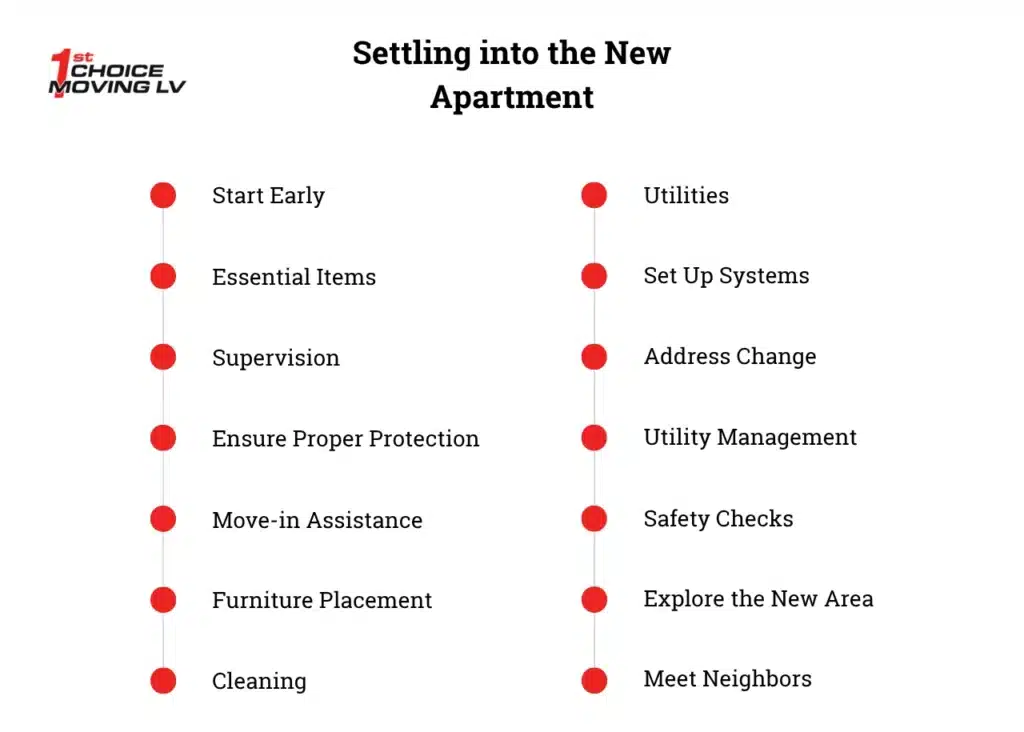
The settling-in process is where the excitement of moving transforms into the comfort of living in your new space. Once the moving truck has pulled away, the next task is to make your apartment feel like home. This involves setting up your essential systems, arranging furniture, unpacking, and ensuring everything is in place. A well-structured approach to this process will help you avoid feeling overwhelmed and make your new apartment feel cozy and functional.
Start Early
Starting early gives you a head start on the moving-in process, preventing unnecessary stress. The sooner you begin, the more manageable the unpacking will feel. By tackling essential tasks first, you will ensure that your apartment is livable as quickly as possible. Here is how to begin:
- Unpack essentials like toiletries, clothes, and kitchenware to have immediate access to them.
- Set up key rooms such as the bedroom and bathroom for comfort.
- Check utilities like electricity, water, and internet to ensure everything is working.
- Organize room by room to keep things manageable and less overwhelming.
Essential Items
Unpacking your essential items first will immediately make your apartment functional and comfortable. These are the items you rely on daily, so getting them in place early will reduce stress and allow you to feel settled right away. Focus on these key items:
- Toiletries like soap, shampoo, toothpaste, and other essentials for quick access.
- Clothing and bedding to make your bed and get dressed.
- Kitchen essentials like plates, silverware, and cookware.
- Important documents such as IDs, insurance papers, and bills should be easily accessible.
Supervision
Proper supervision of the move-in process ensures that everything is handled properly and placed in the right spots. Whether you are managing a team of movers or relying on friends and family, overseeing the unpacking will help ensure that your belongings are treated with care. Here is how to stay on top of things:
- Oversee movers or helpers to ensure items are placed in the right rooms.
- Inspect for damage as items are unloaded.
- Use your inventory list to track all boxes and items.
- Assign tasks like setting up furniture or unpacking boxes.
Ensure Proper Protection
Ensuring your belongings are protected during the move and unpacking process is essential to avoid damage. Using the right protective materials will safeguard fragile items and keep your furniture in good condition. Take these steps:
- Use moving blankets and bubble wrap for fragile items.
- Wrap furniture in plastic to avoid scratches.
- Secure items in the truck to prevent shifting during transit.
- Inspect items as you unpack to ensure nothing was damaged.
Move-in Assistance
If you need help settling in, additional assistance can make the process faster and less stressful. Whether you are hiring professionals or relying on family and friends, getting support can ease the transition. Here is how to get help:
- Hire unpacking services to save time.
- Ask friends or family for help with furniture and boxes.
- Rent moving equipment like dollies or carts for heavy items.
- Consider cleaning services to make your apartment ready for use.
Furniture Placement
Arranging your furniture is key to making your new apartment feel comfortable and functional. A well-thought-out layout enhances both the aesthetic and practicality of your space. Here is how to approach furniture placement:
- Start with large items like the couch or bed to establish a flow.
- Consider the layout to make the most of your space.
- Leave space between furniture to maintain an open feel.
- Focus on focal points in each room, like the TV or a window view.
Cleaning
Cleaning your new apartment before you start unpacking will ensure a fresh, welcoming environment. While you may be eager to get started with unpacking, taking the time to clean first will create a healthier living space. Here is how to approach cleaning:
- Clean high-touch areas like counters and doorknobs.
- Wipe down windows and surfaces for a fresh feel.
- Vacuum carpets and mop floors to remove dust and dirt.
- Clean the kitchen and appliances to make them ready for use.
Utilities
Setting up utilities should be one of the first things you do after moving in. Having access to essential services will make your apartment feel more livable and comfortable. Here is what you should do:
- Set up electricity, gas, and water as soon as possible.
- Activate the internet and cable to stay connected.
- Test all utilities to make sure they are working correctly.
- Confirm billing details to avoid issues later.
Set Up Systems
Setting up systems like smart devices or security measures will enhance your apartment’s convenience and safety. These modern systems can help streamline your daily routines. Here is how to get started:
- Install a smart thermostat to control the temperature of your home efficiently.
- Set up security systems, such as cameras or a smart lock, to increase your apartment’s safety.
- Connect home assistants (like Alexa or Google Home) to help manage tasks hands-free.
- Ensure all appliances are properly set up and in good working order.
Address Change
Notifying others of your address change is critical to receiving mail and services at your new apartment. Here’s how to handle the address change process:
- Notify the postal service of your address change so your mail can be forwarded.
- Update your address with banks, insurance companies, and subscription services to prevent any missed mail or interruptions.
- Inform your employer of your new address for payroll and tax purposes.
- Update your driver’s license and vehicle registration with your new address.
Utility Management
Managing utilities properly ensures a smooth transition into your new apartment. This includes setting up services and keeping track of usage. Here is how to manage your utilities effectively:
- Set up payment schedules to avoid late fees on bills such as electricity, gas, and water.
- Track utility usage to monitor your consumption and keep costs in check.
- Keep records of utility providers for quick reference in case of issues.
- Review your utility bills regularly to make sure everything is accurate and adjust if needed.
Safety Checks
Conducting safety checks right after moving in is essential for peace of mind. Making sure your new apartment is secure will help prevent issues down the road. Below are the things you should check:
- Check smoke detectors to ensure they are working properly and replace batteries if necessary.
- Secure doors and windows to ensure all locks function correctly.
- Check fire extinguishers to ensure they are fully stocked and easily accessible.
- Test carbon monoxide detectors to confirm they are in working order.
Explore the New Area
Getting familiar with your new neighborhood will help you feel more at home. Here is how to explore your new area:
- Visit local stores such as grocery stores, pharmacies, and coffee shops to familiarize yourself with the area.
- Locate parks or recreational areas for exercise or relaxation.
- Find essential services like healthcare providers, post offices, and banks.
- Explore local dining options to discover nearby restaurants and cafes.
Meet Neighbors
Building relationships with your new neighbors creates a sense of community and belonging. Here is how to get started:
- Introduce yourself when you see neighbors in common areas or outside.
- Attend neighborhood events or community gatherings to meet others in the area.
- Join local groups or activities based on your interests to meet people with similar hobbies.
- Offer help to neighbors with small tasks, such as moving heavy items or offering recommendations for local services.
Download Our Ultimate Moving Checklist to Stay Organized
Using a moving checklist is the most effective way to stay organized, manage your time efficiently, and reduce stress during your move. It ensures you will not overlook important tasks like booking movers, setting up utilities, or packing essential items, helping you stay on top of everything from start to finish. By following a detailed checklist, you can break down the entire process into manageable steps, making the move feel less stressful and more controllable.
To make your move even easier, we have created a comprehensive checklist that covers all the key steps. As trusted professional movers, we have included key tasks like when to start packing, how to label boxes for quick unpacking, when to transfer or cancel utilities, and what to do on moving day. Each item is laid out in a clear timeline so you can stay ahead of schedule and avoid last-minute issues. Download our free moving checklist now and take the first step toward a smooth, organized, and stress-free move!


