

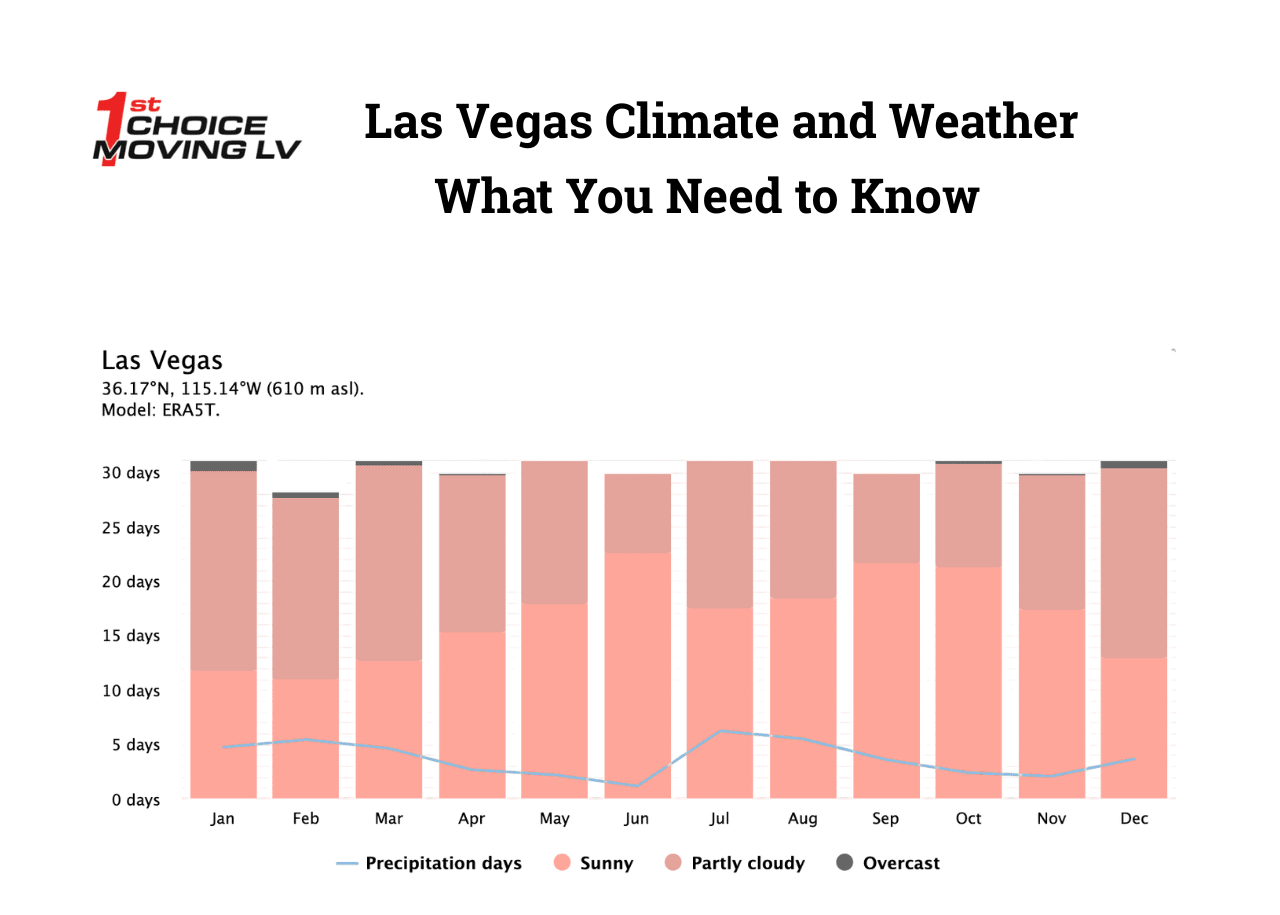
Home to about 670,352 residents, Las Vegas is world-famous for its casinos, resorts, and entertainment venues along the Strip. Its location in the Mojave Desert makes sunshine one of its defining features, influencing both the city’s global reputation and the daily lives of locals. Visitors also explore nearby natural attractions such as Red Rock Canyon, Lake Mead, and the Hoover Dam, all shaped by the desert climate.
The weather is marked by dramatic extremes. Summers are intensely hot, with July highs averaging 104°F, while winters are mild, often ranging between 40-50°F. Rainfall is rare and mostly occurs during the brief monsoon season, when sudden storms can trigger flash floods. The desert air remains very dry year-round, which can be both comfortable for outdoor activity and challenging for health.
These conditions influence how people live, work, and move to Las Vegas. Residents depend on air conditioning, conserve water, and adjust routines to avoid midday heat. For tourists and newcomers, the best time for activities like hiking, boating, or walking the Strip is in the early morning or evening.
Las Vegas Climate Overview
Las Vegas has a desert climate defined by scorching summers and mild winters, with very little rainfall throughout the year. The consistently low humidity makes hydration essential, while both residents and visitors rely on air conditioning and water conservation to manage the heat.
Desert Climate Characteristics
Las Vegas has a subtropical hot desert climate shaped by its location in the Mojave Desert. The region experiences sharp seasonal contrasts, with long stretches of sunshine, very dry air, and weather conditions that strongly influence both lifestyle and infrastructure.
Key characteristics of the desert climate of Las Vegas include:
- Prolonged summer heat that dominates much of the year
- Winters that remain short and generally comfortable
- Dry atmospheric conditions with consistently low humidity
- Limited annual rainfall concentrated in a short period
- Occasional sudden storms during the monsoon season
Impact on Daily Life
The desert climate in Las Vegas affects how residents organize daily routines, design their homes, and manage resources. Extreme heat and limited rainfall have led to lifestyle adjustments that are now part of the city’s identity.
Key impacts of Las Vegas’ climate on daily life include:
- Heavy reliance on air conditioning and cooling systems in homes, offices, and hotels
- Strong emphasis on water conservation due to scarce rainfall and high demand
- Health risks such as dehydration, heat exhaustion, and sun exposure, requiring precautions
- Adapted daily schedules, with outdoor activities often shifted to mornings or evenings
- Infrastructure built to withstand heat, including shaded walkways and cooling technologies
These adaptations show how climate not only shapes comfort and safety but also influences quality of life, relocation decisions, and community planning in Las Vegas.
Impact on Tourism and Infrastructure
Las Vegas’ desert climate plays a major role in shaping both its tourism appeal and the city’s infrastructure. The intense heat and limited rainfall influence how attractions are designed and when visitors choose to travel.
Key impacts include:
- Tourism seasons built around pool weather and outdoor events
- Widespread use of air-conditioned casinos, hotels, and venues
- Smart irrigation systems supporting landscapes and golf courses
- Event planning that avoids the hottest daytime hours
- Increased energy demand during peak summer months
These adaptations ensure that Las Vegas remains comfortable for visitors while sustaining its position as a global entertainment hub despite challenging climate conditions.
Las Vegas Seasonal Weather
Throughout the year, Las Vegas moves through four distinct seasons that reflect its desert setting. Summer brings extreme heat and poolside tourism, while fall introduces cooler days that encourage festivals and outdoor gatherings. Winter remains mild and comfortable for hiking and sightseeing, and spring quickly warms, attracting visitors for concerts and seasonal celebrations.
Las Vegas Summer Weather
From June to August, Las Vegas faces extreme heat with highs reaching the 100°F mark and averaging 104°F in July. Nights remain warm around 70°F, offering little relief during frequent heatwaves. July often marks the hottest stretch, when temperatures may exceed 105°F.
To adapt, residents and visitors rely on air conditioning and schedule outdoor activities for mornings or evenings. Poolside recreation thrives, while clear skies dominate most days. By August, the monsoon season brings brief storms and occasional flash flooding.
Las Vegas Fall Weather
Autumn in Las Vegas signals relief from the summer heat, with temperatures steadily dropping between September and November. Highs slide from 99°F to 61°F, while lows dip from 76°F to the low 40°F, creating cooler days and crisp evenings.
During this season, skies become cloudier, though the chance of rain stays modest at 5–8%. Steady breezes and pleasant conditions encourage outdoor festivals, concerts, and seasonal celebrations, making fall one of the city’s most enjoyable times for residents and visitors.
Las Vegas Winter Weather
From December to February, Las Vegas experiences mild winters compared to much of the U.S. Daily highs gradually rise from 61°F in December to 67°F in February, while lows range from 42°F to 46°F, with rare dips close to 30°F. The coolest stretch typically occurs in late December.
Cloud cover increases during the season, peaking in February, though many days remain clear. December has the shortest daylight at just 9 hours, 42 minutes, while February extends to over 11 hours. These conditions make winter ideal for hiking, sightseeing, and outdoor recreation.
Las Vegas Spring Weather
Spring in Las Vegas marks a rapid transition from cool winter days to near-summer heat. Between March and May, highs climb from 68°F to 94°F, while lows rise from 47°F to 70°F, creating warm afternoons and pleasant evenings for outdoor activities.
As the season progresses, skies become clearer, with most days in late May sunny or partly cloudy. Rain chances fall sharply from 12% in early spring to 2% by May, while breezes strengthen slightly. Festivals and seasonal events make spring one of the most active times in the city.
Las Vegas Monthly Weather
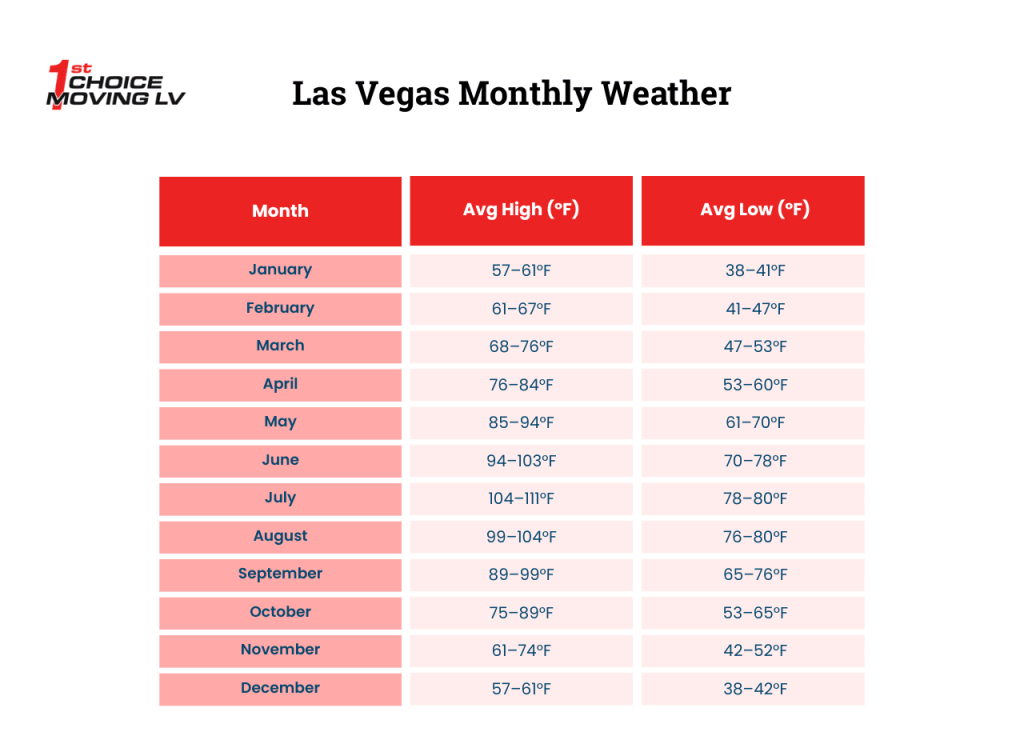
The desert climate in Las Vegas creates sharp temperature swings, from summer highs above 100°F to mild winter days near 56–61°F. Spring and fall bring cooler, pleasant conditions, while summer may see brief monsoon storms and winter occasional rain or frost. These shifts affect tourism, outdoor events, and relocation planning, making timing an important consideration.
Las Vegas Weather in January
January is the coldest month in Las Vegas, with highs rising slightly from 57°F to 61°F and lows from 38°F to 41°F. Skies stay partly to mostly cloudy about 36% of the time, and steady breezes average 7.6 mph. Mild days and cool nights make this month comfortable for hiking, sightseeing, and outdoor activities, with only rare frost in the valley.
Las Vegas Weather in February
In February, conditions continue to warm as daily highs rise from 61°F to 67°F and lows move from 41°F to 47°F. Cloud cover holds steady at around 38%, though early days of the month are often clearer. With solar energy levels increasing, afternoons feel brighter and more pleasant, offering ideal opportunities for sightseeing, hiking, and seasonal events.
Las Vegas Weather in March
March signals the arrival of spring in Las Vegas as highs rise from 68°F to 76°F and lows from 47°F to 53°F. Cloud cover decreases from 39% to 30%, with late March bringing mostly clear skies. Rain becomes less frequent, dropping from 12% to 5%, making this month ideal for outdoor activities and early spring events.
Las Vegas Weather in April
April brings warmer conditions to Las Vegas, with highs climbing from 76°F to 84°F and lows from 53°F to 60°F. Cloud cover stays steady near 28%, though skies are often clearer by late month. Rain chances decline slightly from 5% to 3%, keeping days mostly dry. The warming trend makes April popular for festivals, outdoor activities, and spring tourism.
Las Vegas Weather in May
Warming temperatures in May signal the start of summer in Las Vegas, with highs climbing from 85°F to 94°F and lows increasing from 61°F to 70°F. Cloud cover gradually decreases to around 21%, while rainfall stays very low at 2%. Clear skies and dry conditions make May a prime month for festivals, outdoor activities, and travel.
Las Vegas Weather in June
June ushers in peak summer heat in Las Vegas, with highs rising from 94°F to 103°F and lows from 70°F to 78°F. Cloud cover decreases through the month, reaching just 13% by late June, with June 21 often the clearest day of the year. The hot, dry conditions make air conditioning, hydration, and early or late outdoor activities essential.
Las Vegas Weather in July
At the peak of summer, July delivers the most extreme heat in Las Vegas, with daily highs averaging 104°F and occasionally reaching 111°F. Nighttime lows stay near 80°F, offering little relief. Cloud cover increases gradually, and rainfall chances rise from 3% to 9%, bringing short monsoon storms. Staying cool with air conditioning, shade, and proper hydration is essential.
Las Vegas Weather in August
During August, Las Vegas slowly transitions from peak summer heat, with highs dropping from 104°F to 99°F and lows from 80°F to 76°F. Rainfall chances stay steady at about 9%, bringing brief monsoon showers that average 0.4 inches. Skies grow clearer toward the end of the month, though the heat and dry conditions still demand caution for outdoor plans.
Las Vegas Weather in September
September brings noticeable relief from summer heat in Las Vegas, with highs falling from 99°F to 89°F and lows from 76°F to 65°F. Cloud cover holds steady near 14%, while rainfall chances decline from 8% to 4% through the month. Clear skies are common, especially in mid-September, making this a comfortable time for outdoor activities and seasonal events.
Las Vegas Weather in October
As autumn settles in, October delivers noticeably cooler weather in Las Vegas. Highs ease from 89°F to 75°F, while lows fall from 65°F to 53°F. Cloud cover rises to around 25%, and rainfall chances remain steady at 5%. With shorter days and comfortable conditions, October is well-suited for festivals, outdoor activities, and seasonal events across the city.
Las Vegas Weather in November
November continues the cooling trend in Las Vegas, with highs falling from 74°F to 61°F and lows from 52°F to 42°F. Cloud cover increases slightly to about 32%, while the chance of rain remains steady near 5%. Days shorten by nearly 50 minutes over the month, creating crisp, cooler conditions that make November ideal for hiking, sightseeing, and outdoor recreation.
Las Vegas Weather in December
Winter sets in fully during December, bringing the chilliest conditions of the year. Daily highs range from 61°F to 57°F, while lows dip from 42°F to 38°F, with rare freezes possible. Cloud cover holds steady around 35%, and rainfall chances rise slightly from 5% to 8%. Short daylight hours create crisp days, making December a time for holiday events and outdoor sightseeing.
Annual Las Vegas Climate Statistics
Las Vegas is marked by extreme heat, mild winters, and very limited rainfall compared to most U.S. cities. These climate patterns shape daily routines, from cooling and water use to outdoor planning. Seasonal shifts influence tourism, energy consumption, and recreation, making weather a central factor in how residents live and how visitors experience the city.
Las Vegas Annual Rainfall
On average, Las Vegas receives only about 4.17 inches of rain annually, ranking among the driest major U.S. cities. A wetter season runs from mid-July to late March, peaking in February with about 3.2 rainy days and a 13% chance of rain, while the drier season from late March to mid-July sees almost no rainfall, with June averaging less than one wet day.
Rain is typically light and brief, so the city relies on water conservation strategies like desert landscaping and careful resource management. For residents, this means adapting to scarce rainfall, while visitors usually enjoy consistently dry weather that rarely disrupts outdoor plans.
Coldest Month in Las Vegas
The coldest month of the year in Las Vegas is December, with average lows near 39°F and highs around 58°F. This period falls within the cool season, lasting from late November to late February, when daily highs typically stay below 66°F.
Although winters are generally mild, January nights can occasionally dip below freezing, which is unusual for a desert climate. The cooler weather creates opportunities for hiking at Red Rock Canyon, sightseeing, and indoor entertainment, all popular ways to enjoy the city during the winter months.
Hottest Month in Las Vegas
The hottest month of the year in Las Vegas is July, with average highs near 104°F and lows around 80°F. This peak falls within the hot season, which lasts from early June to mid-September, when daily highs regularly exceed 95°F.
Such extreme heat impacts daily life by driving up energy consumption as residents and businesses rely on constant air conditioning. To stay safe and comfortable, visitors are encouraged to spend time in indoor attractions, enjoy water-based activities like pools, and schedule outdoor plans for early mornings or evenings.
Wettest Month in Las Vegas by Rainfall
The wettest month in Las Vegas is February, averaging about 3.2 days with at least 0.04 inches of rain during the wetter season from mid-July to late March. While rainfall is still light, storms can briefly raise humidity and disrupt outdoor activities.
These monsoon-related showers often encourage residents and visitors to plan indoor entertainment, casino visits, or local events, making it easy to adapt while enjoying the city despite the rain.
Rainiest Month in Las Vegas by Rainy Days
The rainiest month in Las Vegas is February, with an average of 3.2 days of rain, the highest count of any month. Other months, such as January, March, and July, see around 2.5–2.6 rainy days, while May and June average less than one.
Though showers are brief, they can affect outdoor activities and sightseeing by adding cloud cover and occasional damp conditions. Residents and visitors often adapt by turning to indoor entertainment, dining, or events, ensuring plans continue smoothly despite the rare rainfall.
Most Humid Month in Las Vegas
The most humid month in Las Vegas is August, averaging about 1.0 muggy day, the highest of the year. July follows with only 0.7 muggy days, while most months record virtually none, showing how rare humidity is in the desert climate.
This slight rise in moisture comes with the monsoon season, when brief storms make the air feel heavier and less comfortable. To adapt, residents and visitors often shift to indoor attractions, shaded spaces, or poolside activities during the stickiest afternoons.
Snowiest Month in Las Vegas
The snowiest month in Las Vegas is December, which averages about 0.2 inches of snowfall, the highest of the year. In other months, such as January, February, and March, typically record only a trace or 0.1 inches, and many years pass with little or no snow at all.
While snowfall in the valley is rare, the surrounding mountains often see more, creating scenic backdrops. For residents and visitors, snow is more of a novelty than a disruption, offering opportunities for sightseeing and short winter getaways.
Sunniest Month in Las Vegas
The sunniest month of the year in Las Vegas is June, averaging 8.6 kWh of daily solar energy. This peak occurs during the brighter period, lasting 3.3 months from April 26 to August 2, when sunlight exceeds 7.6 kWh per square meter each day. On average, the city enjoys 294 sunny days per year, far more than most U.S. cities.
Such abundant sunshine drives tourism, poolside recreation, and outdoor activities, while also supporting solar energy use. At the same time, it makes hydration, shade, and sun protection essential for both residents and visitors.
Las Vegas Record Cold Temperature
The coldest temperature ever recorded in Las Vegas is 8°F, measured at the airport station on January 13, 1963, January 22, 1937, and January 25, 1937. This extreme low stands in sharp contrast to the city’s typical winter weather, where daytime highs are usually mild.
Such cold events are exceptionally rare in the desert but highlight the climatic variability the region can experience. While winters are generally comfortable, these extremes remind residents and visitors that the desert is not immune to unusual weather swings.
Las Vegas Record High Temperature
The highest temperature ever recorded in Las Vegas was 120°F on July 7, 2024, breaking the previous record of 117°F first set in 1942. Such extreme heat underscores the intensity of desert summers and the challenges they bring to daily life.
Record-breaking temperatures drive up power consumption as homes, businesses, and resorts rely heavily on air conditioning. They also increase the risk of heat-related illnesses, especially for outdoor workers and visitors. To cope, residents and travelers are advised to wear light clothing, stay hydrated, limit outdoor activity during midday, and prioritize indoor cooling options whenever possible.
Las Vegas Natural Disasters & Extreme Weather
Although Las Vegas enjoys mostly sunny skies, its desert climate makes the city vulnerable to flash floods, dust storms, and extreme heatwaves. These hazards can disrupt transportation, challenge infrastructure, and endanger public health, making awareness and preparation vital for both residents and visitors.
Common extreme weather events include:
- Flash floods: Sudden monsoon rains overwhelm storm drains and wash, creating roadway hazards
- Dust storms: High winds lift desert dust, reducing visibility and air quality
- Heatwaves: Prolonged high temperatures strain the power grid and increase health risks
Safety precautions and policies:
- Clark County enforces FEMA floodplain standards, requiring flood-resistant buildings and strict zoning. During storms, avoid flooded roads and follow emergency alerts.
- Advisories urge residents to stay indoors; drivers should pull over safely, keep headlights on, and wait for visibility to improve.
- Building codes mandate efficient cooling and insulation. Residents should use cooling centers, stay hydrated, and limit outdoor activity during peak heat.
These precautions, combined with local building standards and FEMA guidelines, help Las Vegas reduce risks and keep the community resilient in the face of extreme desert weather.
Thinking of Moving to Las Vegas?
With a thriving economy, world-class entertainment, and favorable tax policies, Las Vegas has become a top choice for families, retirees, and professionals. Relocating to the city, however, comes with unique challenges, including scorching summers, dry conditions, and desert living that require reliable air conditioning, careful water use, and heat management.This is where professional Las Vegas moving services prove invaluable, handling logistics such as packing, storage, and transportation to make the transition smoother. From residential to commercial moves, experienced movers ensure the process is efficient and stress-free. To settle into Las Vegas with confidence, many new residents turn to trusted local moving companies for a seamless relocation experience backed by proven service.


